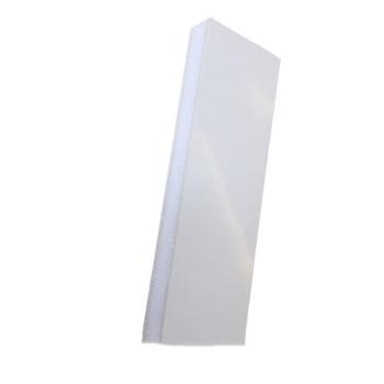
PU Foam Sandwich Panel
Polyurethane Rigid Foam Sandwich Panel (PUF) is a polymer thermosetting thermal insulation heat-resistant synthetic material with excellent performance. It is currently the best thermal insulation material in the market with low thermal conductivity, good thermal insulation effect, and convenient construction.
- Fast Delievery
- Quality Assurance
- 24/7 Customer Service
Product Introduction
Energy efficiency
PU foam sandwich panel has excellent insulation properties, which make it energy-efficient. It can reduce heating and cooling energy costs by up to 50%.
Lightweight
PU foam sandwich panel is a lightweight construction material. It is easy to handle and requires no heavy machinery during installation.
Durability
PU foam sandwich panel is a durable material that can withstand harsh conditions, including extreme weather, chemicals, and impact. It also has a long lifespan of up to 30 years.
Moisture resistant
PU foam sandwich panel has low water absorption properties, preventing moisture-related problems like mold and mildew growth. As a result, it is suitable for high-humidity environments.
Benefits of PU Foam Sandwich Panel
What is PU Foam Sandwich Panel?
Polyurethane Rigid Foam Sandwich Panel (PUF) is a polymer thermosetting thermal insulation heat-resistant synthetic material with excellent performance. It is currently the best thermal insulation material in the market with low thermal conductivity, good thermal insulation effect, and convenient construction.






Why Choose Us?
High Quality
As an FRP product manufacturer, strictly follows ISO 9001 Standard. All products will pass sterner test before being released.
World-Wide Expertise
We know international markets and trends. Our expertise, experience, and network cover all corners of the world.
Customer Service
We earn your respect by delivering on time and on budget. We built our reputation on exceptional customer service. Discover the difference it makes.
The Company's Business Philosophy
People-oriented, quality first, sincere communication, honest management, and the spirit of continuous innovation, dare to challenge, self-reflection, and self-revolution, provide customers with professional products and services.
What types are there?
Sandwich panels for facades
Sandwich panels for facades have been improved for the construction of enclosures in homes, schools, hospitals, industrial centres, or shopping centres. Sandwich panels can also be found for interior partitions that require insulation.
The advantages offered by these façade panels depend to a large extent on the method of joining between panels. The fastening system is implemented in a tongue-and-groove manner, ensuring adequate protection and preventing the dissipation of heat and humidity.
Sandwich panels for roofing
The characteristics of sandwich panels for roofs differ from façade panels in that they will have to withstand large amounts of snow, rain, and other climatic factors.
They are fixed to the structure with self-drilling screws, to prevent leakage in case of rain and humidity, and are often combined with sealing joints, which speeds up installation without sacrificing the insulation layer.
Refrigerated panels
Sandwich panels can also be used in cold rooms or freezers where insulation is required. For these cases, the sandwich panel is designed with a thickness greater than normal to be able to withstand negative temperatures.
To maintain these extreme temperatures necessary for the preservation of fresh food products, special attention must be paid to the joints between the sandwich panels.
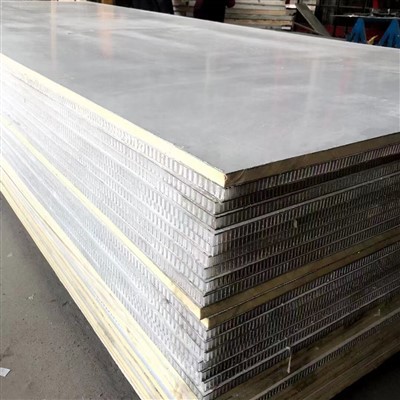
The PU foam core composite board is a typical sandwich structure, the middle is a PU foam board for heat preservation, the upper and lower layers are skin materials, and the skin and core materials are combined with an adhesive (usually polyurethane resin glue).

Weight And Length Of PU Sandwich Panel

The two factors that determine the sandwich panel weight.
The thickness of skin, previously mentioned, allows the sheets to be PPGI (pre-painted Galvanized iron, also known as pre-coated steel, coil coated steel, color coated steel coated by a hot dip zinc substrate), PPGL (pre-painted Galvalume iron, coated by a hot dip zinc substrate), Aluminum sheets, and paper foils.
The density of PU foam produced by metering or foam machine in the sandwich panel production line.
The length of the sandwich panel produced by continuous sandwich panel production depends on the usage requirements, which could be a minimum of 0.5 meters to 22 meters long. Yet, sandwich panels are normally produced in lengths of less than 12 meters for easier transportation and avoiding over-length cargo.
Factors to Consider When Selecting PU Foam Sandwich Panel
1. Core material: The choice of the core material is critical as it determines the overall performance of the sandwich panel. Polyurethane (PU) foam is an excellent core material as it is lightweight, has great thermal insulation properties, and provides good sound insulation.
2. Panel thickness: The thickness of the panel plays a crucial role in determining its strength, durability, and insulation properties. Typically, the thickness of the panel ranges from 30mm to 200mm.
3. Panel width: The width of the panel is important as it affects the ease of installation and transportation. The standard panel width is 1000mm, but wider panels are available.
4. Panel length: The length of the panel should be chosen based on the project's specific requirements. Longer panels are more economical, but they may be more difficult to handle during installation.


Application
Polyurethane foam sandwich panels have a wide range of applications in construction:
Walls: PU foam panels are used for interior and exterior walls in commercial, industrial, and residential buildings.
Roofs: They are also used for roofs, providing insulation and structural stability.
Flooring: PU foam panels can be used as flooring in attic spaces or as floating floors in residential and commercial buildings.
Cold storage rooms: PU foam panels are commonly used in cold storage rooms, providing insulation and reducing energy consumption.
Modular buildings: PU foam panels are used in the construction of modular buildings, providing insulation, structural stability, and ease of transport.
Refrigerated trucks: PU foam panels are used in the insulation of refrigerated trucks, maintaining the temperature of the cargo.
Comparison of sandwich panel and 3d panel
The core of the sandwich panel is injected polyurethane foam or polystyrene foam, which is a good insulator against heat, cold, and sound.
The dimensions of the panels are usually according to the customer's needs and applications, but they often have standard sizes.
In this way, the width is 1 meter and its thickness is 2, 4, 5, 6, 8, 10 cm, and it is made depending on the type and use of them and the customer's needs.
These panels are used in the construction of places such as: sheds, cold storage, clean houses, hospitals, hotels, and conex.
But 3D panels, as the name suggests, have a three-dimensional structure consisting of two layers of steel mesh on both sides and a layer of Unolite or expanded polystyrene placed in the central core for greater strength. Concrete is poured on it.
Precautions for Use of PU Foam Sandwich Panel
Wear proper protective gear, including gloves, safety glasses, and a dust mask, during installation.
Properly ventilate the area while installing the panels to avoid inhaling harmful fumes or dust.
Avoid smoking or open flames while working with PU foam sandwich panels, as they are highly flammable.
Store the panels in a dry and ventilated area to prevent moisture buildup and damage.
Do not expose the panels to extreme temperatures, as this can cause damage to the foam and reduce its insulation properties.
When cutting or trimming the panels, use appropriate tools and techniques to avoid damaging the foam core.
Our Factory
Tangshan Runfeng Composite Materials Co., Ltd is a high-tech industrial group led by a complete industrial chain of new materials developed by the industrial economy. It is located in Tangshan City, Hebei Province, China. In response to global business development, multiple offices in East China, North China, and Northwest China have been established in China.

FAQ
Q: What are PU foam sandwich panels?
Q: What are the advantages of using PU foam sandwich panels?
Q: What are the typical applications of PU foam sandwich panels?
Q: What are the different types of metal sheets used in PU foam sandwich panels?
Q: How thick is the PU foam core in sandwich panels?
Q: How are PU foam sandwich panels installed?
Q: Are PU foam sandwich panels environmentally friendly?
Q: How do PU foam sandwich panels provide insulation?
Q: Are PU foam sandwich panels durable?
Q: What is the standard size of PU foam sandwich panels?
Q: Can PU foam sandwich panels be customized?
Q: How do PU foam sandwich panels perform in extreme temperatures?
Q: Are PU foam sandwich panels fire-resistant?
Q: What is the weight of PU foam sandwich panels?
Q: What is the lifespan of PU foam sandwich panels?
Q: Can PU foam sandwich panels be recycled?
Q: What is the cost of PU foam sandwich panels?
Q: Are PU foam sandwich panels easy to maintain?
Q: Can PU foam sandwich panels be used in seismic zones?
Q: Are PU foam sandwich panels resistant to corrosion?
Hot Tags: pu foam sandwich panel, China pu foam sandwich panel manufacturers, suppliers, factory, Glass Fiber Board Insulation, FRP Panel For Egg Incubator, Fiberglass Foam Core Panels, Rigid Fiberglass Insulation Board, PU Foam Sandwich Panel, Fiberglass Decorative Wall Panels
No Information