


Hey there! As a supplier of Frp Coaming Square Slabs, I often get asked about the stiffness of these products. So, I thought I'd write a blog post to break it down for you.
What is Stiffness Anyway?
Before we dive into the stiffness of Frp Coaming Square Slabs, let's quickly talk about what stiffness means. Stiffness is basically a measure of how much a material resists deformation when a force is applied to it. In simpler terms, it's how well a material can hold its shape under pressure.
Factors Affecting the Stiffness of Frp Coaming Square Slabs
There are several factors that can affect the stiffness of Frp Coaming Square Slabs. Let's take a look at some of the most important ones.
1. Fiber Content and Orientation
Fiberglass Reinforced Plastic (FRP) gets its strength and stiffness from the fibers embedded in the plastic matrix. The more fibers there are, the stiffer the slab will be. Also, the orientation of the fibers matters a lot. When the fibers are aligned in the direction of the applied force, the slab can resist deformation much better. For example, if the slab is going to be used in a situation where it will experience a lot of stress in one particular direction, having the fibers oriented that way can significantly increase its stiffness.
2. Resin Type
The type of resin used in the FRP also plays a crucial role in determining the stiffness of the slab. Different resins have different properties, and some are more rigid than others. For instance, epoxy resins are generally known for their high stiffness and strength compared to polyester resins. So, when we're manufacturing our Frp Coaming Square Slabs, we carefully choose the resin based on the desired stiffness and other performance requirements.
3. Thickness of the Slab
It's pretty intuitive that a thicker slab will be stiffer than a thinner one. When the thickness of the Frp Coaming Square Slab is increased, it can better resist bending and other forms of deformation. However, increasing the thickness also means using more materials, which can increase the cost. So, we need to find a balance between the required stiffness and the cost - effectiveness.
4. Manufacturing Process
The way the Frp Coaming Square Slab is made can also impact its stiffness. For example, in some manufacturing processes, the fibers and resin may not be evenly distributed throughout the slab. This can lead to variations in stiffness across the slab. At our company, we use advanced manufacturing techniques to ensure that the fibers are uniformly distributed and the resin is properly cured, which helps in achieving consistent stiffness across the entire slab.
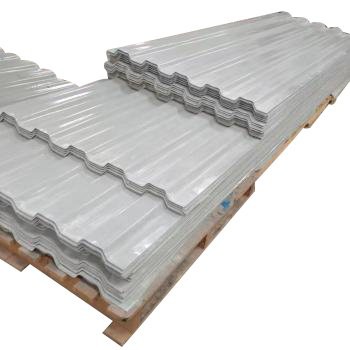

Measuring the Stiffness of Frp Coaming Square Slabs
There are several ways to measure the stiffness of Frp Coaming Square Slabs. One common method is the flexural test. In a flexural test, a slab is placed on two supports and a load is applied at the center. The amount of deflection (bending) of the slab under the load is measured. The less the slab deflects, the stiffer it is. Another method is the tensile test, where a sample of the slab is pulled until it breaks. The stress - strain curve obtained from this test can also provide information about the stiffness of the material.
Importance of Stiffness in Different Applications
The stiffness of Frp Coaming Square Slabs is crucial in various applications. Let's take a look at a few examples.
1. Cooling Tower Applications
In cooling towers, the Frp Coaming Square Slabs are used to enclose the tower and provide structural support. They need to be stiff enough to withstand the wind loads, the weight of any equipment placed on them, and the pressure from the water inside the tower. If the slabs are not stiff enough, they may deform or even break, which can lead to leaks and other problems. You can check out our FRP Wall Casing Panels and FRP Wall Casing Panel for more information on our products suitable for cooling tower applications.
2. Marine Applications
In the marine industry, Frp Coaming Square Slabs are used for various purposes, such as decking and bulkheads. They need to be stiff enough to handle the waves, the movement of the vessel, and the weight of people and equipment on board. A lack of stiffness can cause the slabs to flex too much, which can be dangerous and also lead to premature wear and tear.
3. Industrial Flooring
For industrial flooring, the slabs need to be stiff to support heavy machinery and the constant traffic of forklifts and other equipment. If the slabs are not stiff enough, they may crack or develop uneven surfaces, which can be a safety hazard and also affect the efficiency of the operations.
Our Approach as a Supplier
As a supplier of Frp Coaming Square Slabs, we understand the importance of stiffness in different applications. That's why we put a lot of effort into ensuring that our slabs have the right level of stiffness. We work closely with our customers to understand their specific requirements and then design and manufacture the slabs accordingly.
We use high - quality fibers and resins, and our advanced manufacturing processes ensure that the slabs have consistent stiffness. We also conduct rigorous quality control tests to make sure that every slab meets our high standards.
If you're in the market for Frp Coaming Square Slabs and are concerned about the stiffness, don't hesitate to reach out to us. We can provide you with detailed information about the stiffness of our products and how they can meet your needs. Whether you're working on a cooling tower project, a marine application, or an industrial flooring installation, we have the right solution for you.
Conclusion
In conclusion, the stiffness of Frp Coaming Square Slabs is determined by factors like fiber content and orientation, resin type, thickness, and the manufacturing process. Measuring the stiffness is important to ensure that the slabs can perform well in different applications. As a supplier, we're committed to providing high - quality slabs with the right level of stiffness for your specific needs.
If you're interested in learning more about our Fiberglass Cooling Tower Wall Panels or other Frp Coaming Square Slab products, or if you have any questions about stiffness or other aspects of our products, please feel free to contact us. We're here to help you make the best choice for your project.
References
- Textbooks on composite materials and their properties
- Industry standards for testing the stiffness of FRP materials



